
future-facing bengaluru
cash, bookstores, mangoes; a recent trip

Hello, and thank you, if you’ve newly signed up from LitHub.
My newsletter goes out on Sundays, every three or so weeks, except for this edition, which is late because it has been impacted by many canceled flights and liminal jetlag hours, onwards——
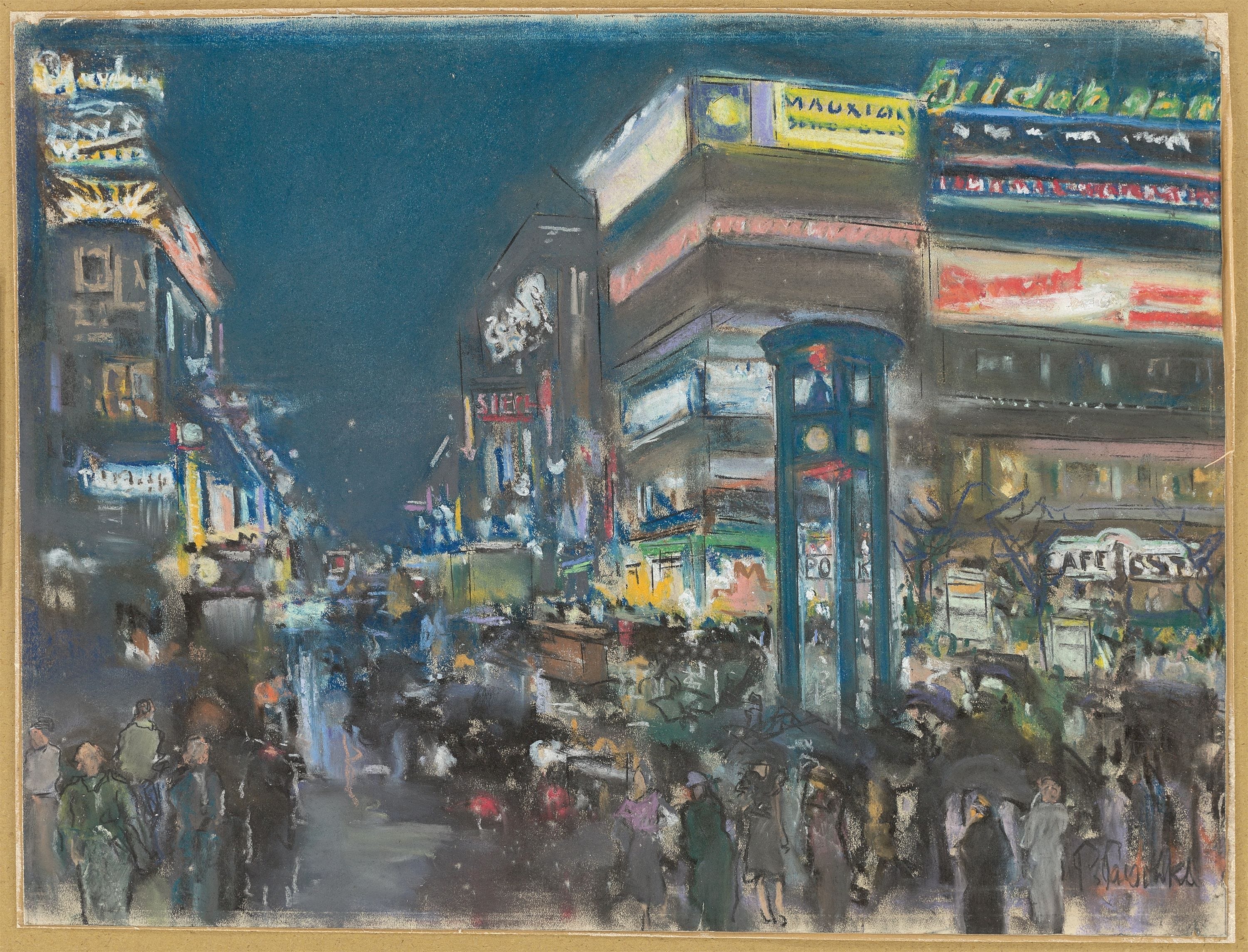

It was only when I lived in Bengaluru on my own as a young woman, and not as a brief visitor from the U.S. fitting into a family role, that I began to see it as a city crouched and ready to spring. Even the many trees, the bursts of rosy pink poui, the traffic cone-orange jacarandas, seem to be in conversation with the ever-forward wind. This a city where everything seems on the verge of dissolving into information.
I am telling you what I saw as a technologist. I had worked in my 20s as a journalist in the city, which meant that, day after day, I followed how small companies, startups, parceled off bits of the internet and sold them as services. Old became new, slow became fast, hard became easy. It sounds like the old shop is having trouble figuring out what items to stock. Shall we give the owner a tablet and set each item up with little codes so he can have a useful view of his inventory?
As things go when you are relentlessly marching forward, every solution was brief and temporary, leading to yet another solution. Well, it certainly seems like the urban, well-off population has started shopping online. Shall we set the merchant up with an ecommerce site?
But then how will he pay? This was my beat, if you could call it one. Money, and how it was being transformed by technology. My first year there was 2014, and I would pay in cash most places. American companies like PayPal did not work in India, and I was limited to a special diaspora Indian bank account that didn’t work everywhere. But it wasn’t only foreigners like me who were opting for cash. Some paid in cash because they didn’t have bank accounts (~53% of people had bank accounts in 2015, if government data is to be trusted), and others simply used cash out of habit; or, in the cases of real estate and big deals, often out of corruption.
My first apartment was a one-bedroom with only a single, gated window above my bed. I had decided, after a confusing run-around with a laundryperson—only exacerbated by my fatal flaw, which is that I don’t know how to ask for help—that I needed to buy a washer-dryer.
By the way, I still struggle with asking for help, albeit less so. I think we live with our flaws until death, and can never get rid of them, and can only learn to make the best of what we are granted.
In those days, whenever I wanted to rely on myself, I would turn to technology. I decided to order a washer-dryer on Snapdeal, a then up-and-coming Indian ecommerce website that has since floundered. I remember the sum because it was the first of my adult, domestic purchases: ₹4833.
Addresses were an issue at the time. When the delivery man called me, I spent a long time navigating him to my home. I did this all in my first language, Kannada, the language of Karnataka, which is the state that houses Bengaluru. I thought my use of the language, which was the language of the street, would endear me to him.
- Do you know this women’s college? - Yes - Stand there, look directly opposite you - OK I’m doing that - Now go to the street in front - The one with the printshop on the corner? - No, sorry, not that front, but slightly to its left, with Ganesh dosa shop - i don’t see a Ganesh dosa shop - which girl’s college are you in front of? - ma’am this is actually a boy’s hostel - then why don’t you just go down the street directly to the girl’s college and so on and so forth.
When he finally arrived, he looked very frustrated. I paid him in all cash, because my card, an American Visa, wasn’t accepted online. The washer-dryer broke in two weeks.
I was in Bengaluru this month because my mother’s brother passed away. It is a very sad death. He was a kind and intelligent man who could connect easily with anyone. What was particularly sad is that he is the fifth to go unexpectedly in recent years in my family.
Strangely, many of my loved ones have died in Bengaluru, even though most of us have never spent more than a few years there. I left Bengaluru in 2017, and did not return again until 2022. I had brought my then-boyfriend with me, because I had believed that, in love, no corner of one’s life should be strange and separate and unknown.
But 2022 was the first time I felt that the city was not mine. We had gone to the road of bars that featured heavily in 20s. None of my old favorites were there. Gone were the quiet, understated indie music bar, the rooftop dinner place that served the best bunny chow I have ever had. There were many reasons that these bars had shut down; private competition, ownership squabbles. And, in 2019, the Karnataka police had pulled up an old 1963 law that banned anywhere that sold liquor from live music or dancing. The crackdown coincided with the state’s election of the BJP, the ruling party under which the current Prime Minister Narendra Modi sits.
I remember feeling embarrassed. Had all I loved about Bengaluru been its consumer pleasures, which I could actually afford because of the exchange rate? Even worse, was I selfish to live abroad and expect the city to stay fossilized and the same? Was I as bad as the rest of the diaspora Indians with their nostalgia for the still-image of the home country?
Had I forgotten that this was a city crouched, always moving forward? My then-boyfriend had been characteristically generous and gentle, but I don’t think he quite understood the city’s transformation.
This time, I landed in Bengaluru airport’s new, international terminal, which has sweeping bamboo arches and hanging gardens. It opened in 2023 and feels like it has the pretensions of Singapore.
When I had first arrived at the old Bengaluru airport in late 2013, it was small and ramshackle, half-open to a canopy of trees. Uber hadn’t come to the city yet, so I had to negotiate in Kannada with a driver who knew, simply by the way I dressed in jeans and a t-shirt, that I was a foreigner. Over the years, I learned to blend in, wearing cotton kurtas and veil-like dupattas. I thought I was very good at camoflauge, until, during this month’s trip, a friend asked me why I was dressed like I was an American who worked for an NGO.
Bengaluru’s forward crouch has meant that my costume is no longer needed. Uber came up six months after my arrival in 2013; this time, in 2026, I couldn’t even hail a rickshaw off the road. A driver would only pick me up if I had booked using an app; and they would be nicer to me if I used Namma Yatri, the alternative app for rickshaw drivers run on the state’s open-source protocol.
I stayed with a close friend. We would order ripe, heavy Indian kesar mangoes through the Indian delivery app Swiggy. The company had gone public in 2024, which, my friend explained to me, had also minted a whole host of newly rich Indian employees who had bought up land in the stylish parts of town. It had also marked a major win for the Indian ecosystem.
My friend, who has lived in the city for a decade now, had also gotten better at cutting mangos, while I still find myself fumbling with them. Here is his strategy: First cut the mango into slices, skin on. Then run a knife around the edges of these slices, until what is left behind is only soft, tart flesh. Cut this into long strips that slip easily into the mouth. The seed is reserved for those willing to struggle.
I’m not sure if the things that appear to have stayed the same are just slow to change. It’s not clear if they will also disappear soon.
Bengaluru is still a very literary city. There are several popular bookshops in the center of town, on the road that might be considered its Times Square. These bookstores stock exciting books that draw in urbane, stylish crowds. Many of these books are bold in their criticism and are from a new cohort of often internet-savvy authors.
The weekend that I went was the first dry, sunny day after a flood. Many of the bookstores had been affected, including Bookworm, a newer entrant that I have grown to love. Outside the bookstore, a grid of books had been laid flat to dry in the sun, and couples murmured and tiptoed around them.
I was a little hungover. I don’t drink much in New York anymore because it’s expensive, but in Bengaluru, I am a lush, eager to commence the next round. My head was aching, and I found myself wanting something a little quieter. I took the comma-shaped side road to Select Book Shop, my favorite bookstore, an old institution that doesn’t quite fit in with the new cohort.
During my Bangalore years, its owner KKS Murthy had been my personal index. Even more so in those years than now, I had felt that my reading tastes were off-beat. Perhaps I was implicitly importing hipster millennial culture. I didn’t find myself following what was popular or new, nor did I associate with a university, nor was I following a tradition. I simply liked reading. And Murthy had procured for me, at a very impressionable time, Robert Musil’s Young Törless, Sarnath Banerjee’s graphic novels, and strange, serious Soviet-Indian children’s books.
I landed up at the shop, and, to my surprise, Murthy was not there. Instead, there were two older men sitting on chairs. After seeing the question on my face, one gave me a nod. - Didn’t you know? My father has passed away.
Upstairs in the dusty room where the more obscure books were kept, I would try and remember their expressions. Had they been surprised to see a customer? Were they, too, feeling that these were the last days?
I never tied a neat bow around the time that I’d spent in Bengaluru in my 20s. I had kept reporting, and then I had left. One of the last stories I had reported before leaving Bengaluru was on the United Payments Interface, the UPI, the government’s attempt to create rails for technology that would let banks work together.
The announcement had taken place at a very strange event. Most events that I went to in those years were privately funded, and would often involve at least one person from a U.S. office. In the years that I had been reporting, the venture capital world had grown more excited by the prospect of the “next billion,” or the large population who would come online at a time of economic growth. Theoretically, all of these people would have money to spend and the U.S. wanted in. Venture capital in my reporting years was thriving; 2015 was the highest year in deal volume in history at the time. But then, along came 2016. Two of Indian technology’s biggest funders, SoftBank and Tiger Global, pulled back. Money into startups steeply declined and nearly halved.
That was when I had gone to this event in a very stiff room, with ironed white tablecloths and waiters wearing cummerbunds. Upfront were talking heads from the government in pastel and paisley Nehru jackets. The UPI would let people to transfer money to each other and to stores. But this would require bank accounts, which was the next step the government was working on: a massive free bank account scheme to get everyone signed up.
I hadn’t had much faith in the service at the time. In the U.S., outside of utopian New York, government services never seem to have the same sheen as private companies. So who would use this?
Bengaluru would. No one seems to use cash anymore. UPI has become popular with the help of a few, fast-moving private companies. When I was writing about UPI in 2016, it was doing 20 million transactions between 2016 and 2017. By 2025-26, it’s up to 241.62 billion transactions, if government data is to be trusted. I have read that UPI’s impact is stark across India, although it seems to be even moreso in Bengaluru, where even roadside marigolds can be bought with a QR code.
Last week, I had one rickshaw driver look back at me quizzically with the colorful, political figurehead notes I’d handed him in his hand. Madam, you really have to move into the future, nobody carries change anymore.
In a city that marches onwards at this pace, I find myself wondering what I can claim. When I was young, I would speak Kannada and feel like I was part of the city, and that I understood the language of the street and the shop. But upon returning, I have been reminded that language fluency is not the same as voting, or paying taxes, or educating my children in local schools, or having to tie my mast to the future of the country.
I have a pair of friends there, a very sweet couple. One is Hindu and the other is Muslim. They’ve taken me to new and interesting places. We have drunk martinis and chowed down Korean fried chicken on rooftops. Sometimes, on rental applications, they feel wary to list each other’s names together. The worry is that a landlord will deny them.
I worry in other ways for my friend. My ancestral family is not from Bengaluru. They are from around eight hours away, from a coastal town with an excellent university and delicately spicy ghee roast shrimp that comes served with the softest, most tender neer dosa. It is a diverse region with centuries-old masjids, churches, and temples. I have taken the overnight bus to this town many times. At least twice, I have not been able to take the bus the whole way. Someone in the family will come to pick me up. I will be on the back of their scooter, when we are finally out of earshot, when they will tell me that it is the same as usual. A Muslim shopkeeper has been murdered. Fifty years of this. At least.
But the coast is about eight hours away. Bengaluru is dead-center in the middle of the Deccan Plateau. It is tree-lined, and, in the British-era, was a retreat. Only in recent years is it becoming a city. And my friends, like me, are technologists. We can watch and be a part of Bengaluru’s march forward. And we can only wait to see what the city decides to take along with it into the future.
This is a lovely, thoughtful piece. Thank you for putting it out there. As an outsider spending a lot of time in Bengaluru, I found it very helpful to understand the history and transformation behind what I see and experience now. However, most importantly, realize that I'm also in a quest to figure out what I can claim as mine in this city.